

Recruiters prioritize demonstrable skills and measurable results above all else, followed by a clear, tailored resume, relevant experience, communication and teamwork, and consistent professionalism. Screening has shifted toward skills-first methods and automated tools, including applicant tracking systems and generative AI, which means candidates who document evidence and mirror job-description keywords clear the first filter far more often than those who rely on vague claims.
TL;DR:
- Recruiters now prioritize verifiable evidence of skills and results, using keywords from job descriptions and automated screening tools to filter candidates effectively.
- Demonstrating specific achievements with measurable outcomes, such as metrics or scope, is crucial for both resumes and interview stories to pass screening and evaluation.
- Formatting resumes for ATS compatibility and aligning online profiles with application details significantly improve chances of passing automated and human review stages.
- Behavioral interview preparation should focus on clear, outcome-driven stories that reflect the key competencies and adapt to interviewers’ structured rubrics.
- Including verifiable work samples linked through platforms like Google Drive can distinguish candidates by providing concrete proof of accomplishments beyond claims.
Table of Contents
- 1. Top Qualities Recruiters Screen For
- 2. Resume Essentials: What to Include, Cut, and Format
- 3. How Recruiters Screen: ATS, GenAI, and Human Heuristics
- 4. Interview Prep That Matches What Recruiters Measure
- 5. Mistakes That Sink an Otherwise Strong Candidate
- 6. What Research Shows About the Shift to Skills-First Hiring
- 7. Understanding the Recruitment Process Stages
- 8. What Recruiters Look for in Your Online Presence
- 9. The Importance of Cultural Fit and Shared Values
- Why Résumés Alone No Longer Prove What Recruiters Need to See
- Turning Verified Work Into a Recruiter’s First Yes
- FAQ
- Sources
1. Top Qualities Recruiters Screen For
Recruiters filter for a short list of human qualities because each one predicts a different kind of on-the-job risk. Competence and demonstrated results signal that a candidate can do the work without heavy ramp-up. Communication indicates whether a hire will create friction or clarity in cross-functional settings. Teamwork and emotional intelligence predict how someone behaves under pressure, in conflict, or during a deadline crunch. Adaptability tells a recruiter whether a candidate will survive a reorg or a shifting scope. Professionalism, the least glamorous of the group, is often the deciding factor between two similarly qualified finalists.
Each of these qualities needs a specific kind of evidence, not an adjective. A resume that says “strong communicator” proves nothing. A resume that says “led weekly cross-team syncs between engineering and sales, cutting handoff delays by 30%” proves a point and gives an interviewer something to probe.
- Competence: show a metric tied to an outcome, such as “reduced customer churn by 12% over two quarters.”
- Communication: describe a specific audience and format, such as presenting quarterly results to executive leadership.
- Teamwork: name the team size and your role in a shared win, not just “collaborated with others.”
- Adaptability: describe a pivot you managed, such as absorbing a teammate’s workload during a hiring freeze.
- Professionalism: reference consistency, such as meeting every deadline across a specific project timeline.
Interview anecdotes should mirror these same bullets almost word for word. If your resume claims a result, your interview story should walk through how you got there, step by step, with the obstacle and the fix named explicitly.
Pro Tip: Keep a running list of every project outcome you can quantify, updated monthly, so you never have to reconstruct a metric from memory during interview prep.
2. Resume Essentials: What to Include, Cut, and Format
A resume earns attention in three qualities: clear, concise, and compelling. Clear means a recruiter understands your title and impact without rereading a line. Concise means every bullet earns its place. Compelling means the strongest result sits at the top of each section, not buried under routine duties.
Your summary, when you include one, should run three to five sentences and lead with your most relevant accomplishment rather than a generic description of your role, according to career services guidance from Queensborough Community College. Tailor it for each application so the first few lines answer the recruiter’s real question: does this person fit this specific job.
The strongest resume bullets follow a simple formula: action verb, context, metric, and outcome. Two examples:
- “Redesigned onboarding flow for a 50-person sales team, cutting ramp time from six weeks to three.”
- “Negotiated vendor contracts across four regions, saving $85,000 annually without reducing service levels.”
Where a hard number isn’t available, use scope instead: team size, budget managed, or frequency of a task, which still signals weight and reach.
Formatting matters as much as content once automated systems enter the picture:
- Use standard section headers (Experience, Education, Skills) so parsing tools recognize them.
- Avoid tables, text boxes, and columns that scramble when converted to plain text.
- Save as a standard file format unless the posting specifies otherwise.
- Mirror the exact phrasing from the job description for your core skills, rather than a close synonym.
- Keep the file name professional and simple, such as “FirstName_LastName_Resume.”
A resume that follows these rules survives both the ten-second human scan and the keyword match a screening tool runs first.
3. How Recruiters Screen: ATS, GenAI, and Human Heuristics
Applicant tracking systems parse resumes into structured fields before a human ever opens them, and formatting choices that look fine on screen often break that parsing. Tables, headers placed in footers, and graphics-heavy templates routinely get skills or dates dropped entirely, which can bury a qualified candidate before review even starts.
Generative AI has added a second layer. Recruiters increasingly use GenAI to screen resumes, match candidates against job descriptions, and generate tailored interview questions and scoring rubrics, according to SHRM reporting on GenAI in recruiting. Recruiters using these tools often start from the job description itself to generate screening questions, which means candidates whose resume language and interview examples map closely to that posting face sharper, more role-specific probes rather than generic ones.
A substantial portion of employers now use skills-based hiring practices, with over half applying them consistently during screening and interviewing, according to NACE research on skills-based hiring. That shift rewards candidates who can point to specific, verifiable skills rather than job titles alone.
Practical steps that follow from this:
- Pull the exact skill phrases from the job description and work them into your resume naturally.
- Open your resume file in plain text view to catch anything an ATS might fail to read.
- Align your LinkedIn headline and experience section with your resume so automated cross-checks don’t flag a mismatch.
4. Interview Prep That Matches What Recruiters Measure
Structured, behavioral interviewing has become the standard tool for separating genuine skill from a polished resume. Over 86% of organizations now use behavior-based interviewing to assess how candidates have actually applied their skills, not just whether they claim to have them, according to SHRM’s fact sheet on behavior-based interviewing. Structured rubrics also improve consistency between interviewers, so a well-prepared story tends to score the same way regardless of who asks the question.
- Build three to five stories using a situation, task, action, and result structure, each tied to a competency likely to appear in the job description.
- Convert routine responsibilities into measurable outcomes before the interview, not during it: “managed inventory” becomes “cut stockouts by 18% across 40 SKUs.”
- Prepare a version of each story scaled to the role’s seniority, since a panel interviewing for a lead position expects ownership language a junior interview does not require.
- Hold back compensation history and timeline pressure until the recruiter raises it, since volunteering that information early weakens your negotiating position.
Pro Tip: Rehearse your STAR stories out loud, not just mentally; the gap between a story that sounds fluent on paper and one that sounds fluent in your own voice is usually the difference in a live interview.
5. Mistakes That Sink an Otherwise Strong Candidate
Most rejections trace back to a short list of avoidable errors rather than a lack of qualification. Career and recruiting experts caution against oversharing in ways that signal desperation or create doubt, such as mentioning how many other jobs you’ve applied to or criticizing a former employer without context, as outlined in Forbes’ guidance on what not to tell a recruiter.
- Don’t reveal that you’re desperate for any job rather than this specific one.
- Don’t disclose your full salary history before being asked.
- Don’t list duties instead of outcomes on your resume.
- Don’t submit a resume with typos in the first three lines, where scanning attention is highest.
- Don’t use a generic resume for every application when tailoring takes minutes.
- Don’t speak negatively about a past manager, even if the criticism is fair.
Fixing most of these takes a single proofreading pass: read your resume backward, line by line, to catch errors your brain glosses over when reading forward.
6. What Research Shows About the Shift to Skills-First Hiring
The data points in one direction: employers increasingly hire for demonstrated skill rather than credentials alone, with nearly two-thirds now using skills-based practices. SHRM’s research on the skills-first movement ties this shift to wider use of behavioral interviews and structured rubrics. For candidates, the takeaway is practical: prioritize evidence over titles, and structure that evidence the way a rubric would score it.
7. Understanding the Recruitment Process Stages
Most hiring processes move through five predictable stages, and knowing what each one actually evaluates helps you prepare the right evidence at the right time. The application stage is almost entirely about keyword and skill matching, often automated, so this is where tailoring your resume language matters most. The initial screen, usually a recruiter phone call, checks for basic fit: availability, salary range, and whether your background matches the posting closely enough to move forward.
The interview stage is where behavioral questions dominate, testing the specific competencies tied to the role rather than general likability. Many processes now include a skills assessment or work sample at this stage, reflecting the skills-first shift covered earlier. Reference and background checks follow, verifying what you’ve claimed rather than introducing new criteria. The offer stage closes the loop, and it moves faster when every earlier stage has gone smoothly, since a recruiter who trusts your evidence has fewer reasons to hesitate.

Each stage filters for something different, which is why a resume heavy on keywords but light on verifiable detail tends to stall at the interview stage rather than the application stage: the automated filter passes it through, but the human reviewer finds nothing to confirm.
8. What Recruiters Look for in Your Online Presence
A LinkedIn profile that contradicts your resume, even slightly, raises a flag before a recruiter has asked a single question. Mismatched dates, different job titles for the same role, or a headline that reads as a generic job title rather than a value statement all signal carelessness at best and inconsistency at worst.
Recruiters typically check for a professional photo, a complete work history, and recommendations or endorsements that back up your stated skills. A profile with none of these reads as inactive or unverified, which works against you even if your resume is strong. Public posts and comments matter less than most candidates assume, but anything openly unprofessional or inconsistent with your stated industry focus can still cost you a callback.
The simplest fix is alignment: your resume, your LinkedIn, and any public portfolio should tell the same story in the same order, using the same numbers. An interactive resume that links directly to verified work samples closes much of this gap, since it gives a recruiter something to check rather than something to take on faith.
9. The Importance of Cultural Fit and Shared Values
Cultural fit is often misunderstood as “would I get along with this person,” but recruiters generally use it to mean something narrower: does this candidate’s working style match how the team actually operates. A fast-moving startup and a highly regulated enterprise reward different instincts, and a candidate who demonstrates awareness of that difference signals judgment a resume alone can’t convey.
The clearest way to show fit is through the examples you choose, not through claims about your personality. If a company’s stated values emphasize collaboration, a story about solo achievement, however impressive, lands less effectively than one that highlights how you brought others along. Researching a company’s public values before the interview, and then selecting stories that naturally reflect them, does more work than directly stating “I’m a great cultural fit,” a phrase that carries little weight on its own.
Recruiters also watch for the opposite signal: a candidate who pushes back thoughtfully on a mismatch, rather than agreeing with everything, often reads as more credible than one who seems to perform enthusiasm for every value statement presented.

Why Résumés Alone No Longer Prove What Recruiters Need to See
The honest problem with most resume advice is that it treats the document as the finish line, when recruiters increasingly treat it as a claim awaiting verification.
The uncomfortable implication is that candidates who’ve done excellent work but describe it the same way everyone else does (vague verbs, no numbers, no artifacts) will keep losing out to candidates with weaker results but sharper documentation. Communication of evidence, not just the existence of it, has become the real differentiator. That favors candidates willing to build something beyond the resume format itself, whether that’s a portfolio, a work sample, or a verifiable record a recruiter can check without waiting for a reference call three weeks into the process.
— Alloquy Team
Turning Verified Work Into a Recruiter’s First Yes
Everything in this article points to one practical gap: recruiters want evidence, but most resumes only offer claims. Alloquy addresses that gap directly by linking your Google Drive documents and other work samples to the achievements on your profile, so a recruiter’s AI-assisted questions get answered with verified, contextual detail instead of a static bullet point.
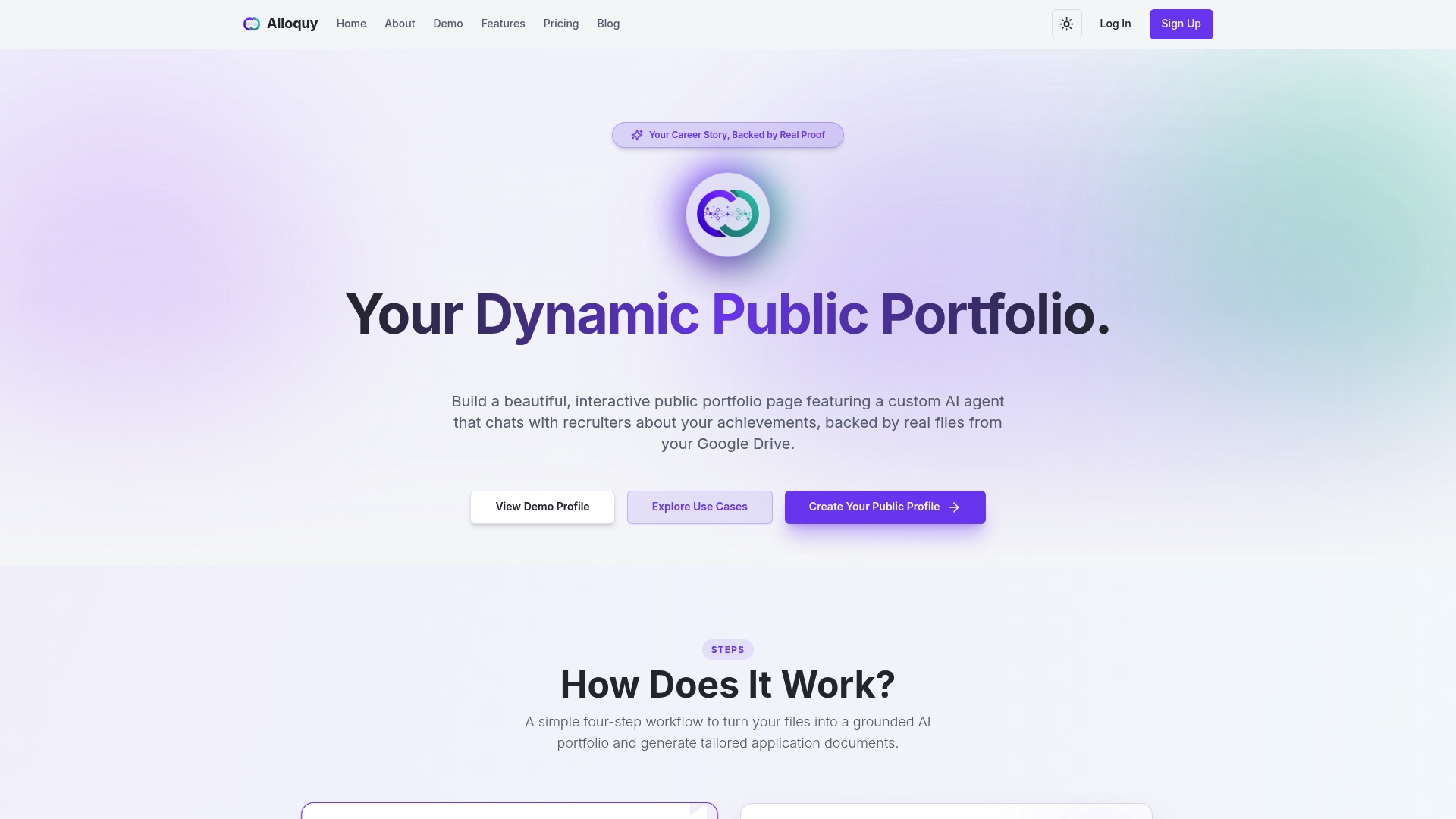
A profile takes minutes to set up and gives you a head start on the evidence-backed approach this article recommends.
- Create a free profile and add one verified achievement to start.
- Link a Google Drive document as proof behind a specific result on your resume.
- Generate a tailored resume or cover letter pulled from your own data.
FAQ
What are the 3 C’s of a resume?
The 3 C’s are clear, concise, and compelling: a resume that communicates your role instantly, trims anything that doesn’t earn its place, and leads with your strongest, most specific result first. Following this structure helps a resume survive the short scan most recruiters give it before deciding whether to read further.
What are the top qualities recruiters look for in a candidate?
Recruiters consistently prioritize demonstrable skills and measurable results, clear communication, teamwork, adaptability, and reliable professionalism. Behavioral interviewing, used by over 86% of organizations, is the primary method recruiters use to test whether these qualities show up in real situations rather than just in self-description.
What should you avoid telling a recruiter?
Avoid signaling desperation, disclosing your full salary history unprompted, or speaking negatively about a past employer, since all three can weaken your position without adding useful information, according to Forbes’ recruiting advice. Framing your search as selective and outcome-focused tends to read as more credible than oversharing details about your circumstances.
How is AI changing what recruiters look for in applications?
Recruiters increasingly use generative AI to screen resumes against job descriptions and generate role-specific interview questions, which rewards candidates who mirror job-description language and provide verifiable detail, as described in SHRM’s reporting on GenAI in recruiting. Platforms like Alloquy respond to this shift by letting recruiters query an AI assistant directly against your verified evidence rather than relying on resume text alone.
Do recruiters check social media and online profiles?
Yes, recruiters commonly review LinkedIn and other public profiles to confirm consistency with your resume, checking for matching job titles, dates, and endorsed skills. A profile that contradicts your resume, even in small details, tends to raise more concern than one that simply lacks activity.
Sources
References and background checks exist to confirm, not discover. By the time a recruiter requests references, they’re generally looking for consistency between what you’ve claimed and what a former supervisor or colleague reports, rather than fishing for new information. A reference who confirms your stated accomplishments in their own words, with specific detail, carries more weight than one who offers only general praise.
Choosing references strategically matters more than most candidates realize. A former manager who can speak directly to the metric on your resume, such as the colleague who watched you cut a process time in half, is far more valuable than a senior executive who barely worked with you day to day. Giving your references a short reminder of the specific project or result you’d like them to speak to helps the conversation stay aligned with your resume rather than drifting into vague generalities.
Background checks typically verify employment dates, titles, and sometimes education or certifications. Discrepancies here, even small ones like a rounded job title, can undo trust built across the rest of the process, so accuracy on your resume protects you at this final stage as much as it helps you earlier.
- Almost two-thirds of employers use skills-based hiring to help identify job candidates
- How recruiters are using GenAI to enhance interview prep (SHRM)